You love your neighborhood, your kids love their school, and you’ve spent years making your house feel like home. But somewhere along the way, the layout that once worked perfectly for your family has become increasingly frustrating. Maybe the kitchen feels too small, the bedrooms no longer accommodate everyone’s needs, or you’re simply tired of navigating the same awkward spaces every day.
Eventually, the conversation turns to whether it’s worth investing in your existing home or if you’d be better off finding something new. It’s a reasonable question, particularly when you’re considering a renovation or addition that could cost $150,000 or more. Between construction costs, property values, mortgage rates, and the emotional attachment you have to your home, there’s a lot more to consider than simply comparing square footage.
As an architectural designer working with homeowners throughout Central Pennsylvania, I approach this decision by looking beyond the immediate request. Before we start discussing additions, removing walls, or developing floor plans, I want to understand what isn’t working and what the homeowner is ultimately hoping to achieve. Sometimes those conversations lead to a substantial renovation, while other times we discover that a smaller intervention could make a meaningful difference.
Is Your Home Too Small, or Is It Just Not Working for You?
One of the most common things I hear from homeowners is that they need more space. That may be entirely accurate, but it’s worth investigating whether the problem is actually a lack of square footage or how the existing square footage is being used.
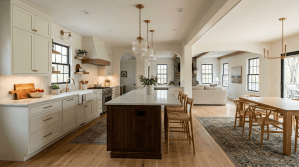
Consider a home with a formal dining room that rarely gets used, a kitchen separated from the main living area, and a hallway that consumes valuable space without contributing much functionality. Adding 500 square feet might give the family more room, but it doesn’t necessarily address the underlying circulation problems. In some situations, reconfiguring the existing floor plan could produce a better-functioning home without the cost and complexity of a major addition.
That’s why I’m interested in how a family actually lives in its home. Where does everyone gather? What creates frustration during the morning routine? Which rooms are rarely used, and which ones are constantly overcrowded? Understanding those relationships allows us to evaluate the house as a whole rather than treating every individual complaint as a separate construction project.
What Would Moving Actually Cost?
When comparing renovation against purchasing another home, many people begin with their anticipated construction budget and the listing prices of larger properties. However, that comparison overlooks several important financial considerations.
Moving may involve real estate commissions, closing costs, moving expenses, higher property taxes, and a new mortgage with substantially different financing terms. Depending on the condition of the replacement property, you may also find yourself making improvements shortly after moving in. The larger house you purchase isn’t necessarily going to have a better floor plan, either.
Renovating comes with its own expenses, including design services, construction, permitting, potential financing costs, and allowances for unexpected conditions. A substantial renovation can also disrupt your daily routine, particularly if the work affects kitchens, bathrooms, or primary living spaces.
Neither option is automatically more economical. The important thing is to compare the complete financial picture, including how long you expect to remain in the home and whether the investment supports your long-term plans.
Can Your Existing Home Accommodate What You Want?
Even when renovating seems like the ideal choice, we need to determine whether the property can reasonably support the proposed improvements. Zoning setbacks, lot coverage restrictions, drainage, structural conditions, and existing utilities can all affect what’s possible.
For example, a homeowner may envision a beautiful first-floor primary suite addition, only to discover that the available building area is limited by setbacks or existing site conditions. Another project may require significant modifications to the roof structure or mechanical systems to accommodate what initially seemed like a straightforward expansion.
These situations don’t necessarily eliminate the possibility of renovating, but they can influence the scope, budget, and design direction. Identifying those considerations early is one of the most valuable parts of the planning process because it allows us to make informed decisions before investing heavily in a particular concept.
Think About the Next Ten Years, Not Just the Next Two
A home should accommodate more than your immediate needs. As families grow, children become more independent, parents age, and lifestyles evolve, the way we use our homes changes considerably.
If you’re planning to stay for another fifteen or twenty years, improving the layout, creating more flexible living spaces, or accommodating future accessibility needs may offer tremendous personal value. That doesn’t mean every dollar spent will be recovered at resale, but it does mean the investment may be worthwhile for reasons beyond the property’s market value.
On the other hand, if you expect to relocate within a few years, a substantial renovation may be difficult to justify financially. In that case, targeted improvements or moving sooner could be the more practical direction.
Before You Decide, Understand Your Options
I often tell people that architecture taught me how to solve problems at a high level. It’s about taking a series of sometimes connected, sometimes competing concerns—function, budget, aesthetics, construction, regulations, and personal priorities—and finding a solution that addresses them collectively.
That’s the perspective I bring to residential design. I’m not interested in recommending a larger project simply because someone has the budget to pursue one. I want to understand what they’re trying to accomplish and determine whether the proposed investment actually supports that goal.
If you’re considering renovating or moving in Harrisburg, Mechanicsburg, Camp Hill, Carlisle, Hershey, or the surrounding Central Pennsylvania region, Gable Design can help you evaluate your home’s potential before committing to construction.
A Design & Planning Consultation is an opportunity to discuss your priorities, understand potential constraints, and establish a clearer direction. You don’t need to have every detail figured out before starting that conversation.
Before deciding you need a different house, it may be worth discovering what your existing home could become.