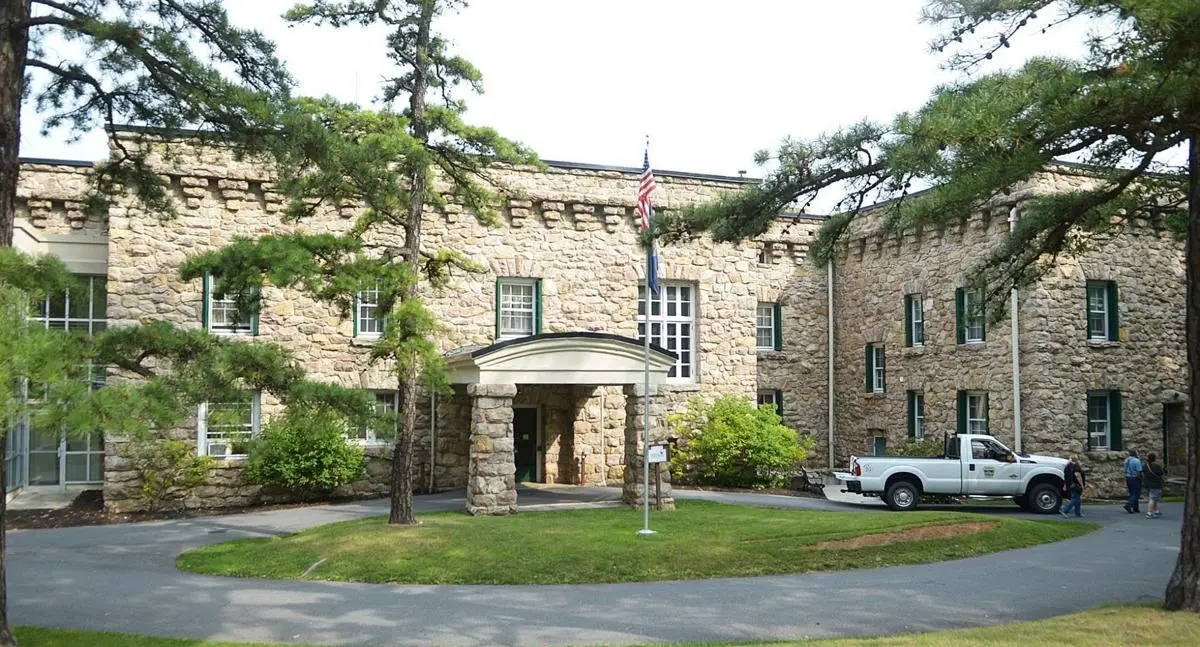
Nestled atop South Mountain in Cumberland County sits a striking stone mansion with sweeping views over the Cumberland Valley — the Cameron-Masland Mansion. Built in 1908 as a summer home by James McCormick Cameron, this 32-room estate blends historic architecture with an unforgettable natural setting and stands today as both a testament to early 20th-century design and a gateway to one of Pennsylvania’s most remarkable state park landscapes.
Far more than just an old house, the mansion and its terrace overlook offer a window into how architecture, natural landscape, and thoughtful stewardship intersect. Whether you’re an architecture enthusiast, a history buff, or someone seeking a meaningful place to explore, the Cameron-Masland Mansion reveals layers of story and design that are worth slowing down for.
THE HISTORY OF THE MANSION
Around 1908, James McCormick Cameron — a member of a prominent Pennsylvania family with deep roots in state politics and industry — commissioned the construction of this mansion as a seasonal retreat. Perched on a ridge high above the Cumberland Valley, the mansion was built with native Antietam quartzite quarried nearby, giving it a robust, almost fortress-like presence that still feels grounded in place.
The structure’s design aims to evoke the feel of an Italian villa with its flat roof, expansive windows, and flagstone terrace — an unusual architectural expression in rural Pennsylvania at the time. Its internal framing of reinforced concrete was advanced for the era, chosen both for durability and fire protection.
When Cameron passed away in 1949, the estate was purchased by the Masland family of Carlisle, who used the grounds as a company guest house and training center. Later, the Nature Conservancy and the Commonwealth of Pennsylvania preserved the property and integrated it into the Kings Gap Environmental Education Center, which opened in 1977.
ARCHITECTURAL CHARACTERISTICS AND DESIGN DETAILS
One reason the Cameron-Masland Mansion stands out among Pennsylvania landmarks is its use of local materials and unusual structural methods. The native stone exterior not only roots the building visually in its mountainous surroundings but also exemplifies early 20th-century craftsmanship.
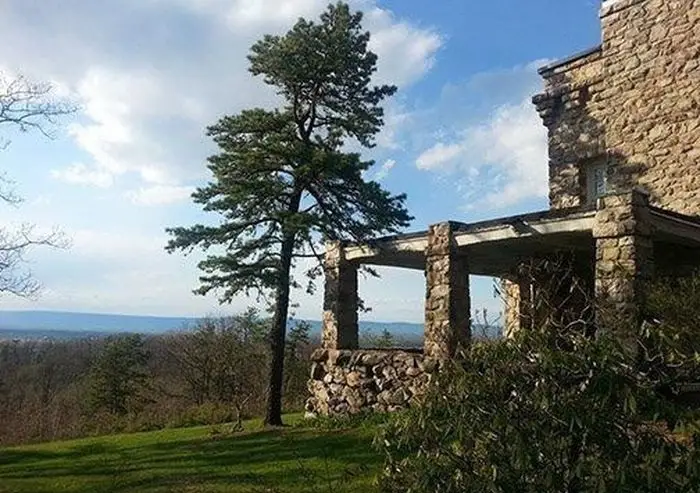
The terrace overlooking the valley — effectively a designed outdoor extension of the home — plays a dual role: part architectural composition, part scenic platform. It invites visitors to move through space intentionally, an idea still valued in contemporary architecture and landscape design.
Kings Gap State Park Cameron-Masland Mansion by Annabelle Dando Photography
THE VIEW — WHY IT’S NOT JUST HISTORY, BUT EXPERIENCE
Today, one of the mansion’s most compelling features is the terrace view — a broad panorama that stretches across forests, farmland, and distant ridgelines. This vantage point offers not only aesthetic pleasure but a reminder of how environment and architecture converse. It’s not an accidental pairing; the placement of the mansion high on South Mountain was clearly chosen to emphasize this encounter between built form and natural landscape.
From the lush greens of summer to the fiery hues of autumn, the seasonal shifts at Kings Gap turn this historic site into a living exhibit of both natural change and architectural permanence.
VISITING TODAY — PRACTICAL INSIGHT
The mansion is part of the Kings Gap Environmental Education Center, a 2,500-acre state park with over 25 miles of trails and a range of outdoor experiences — from hiking and photography to historical exploration.
While the mansion itself is framed by interpretive signage and marked pathways, many visitors come not only for its past but for the experiential clarity that comes from standing on the terrace and quietly surveying the valley below — the kind of quiet clarity that many design decisions start with.
LOCAL ARCHITECTURAL LESSONS FROM CAMERON-MASLAND
If you think about how this place was built:
It uses local materials in a way that feels of the place
It merges indoors and outdoors through intentional terrace orientation
It anticipates views, light, and landscape as extensions of design
These principles — using what exists, honoring place, and organizing spaces around experience — are as relevant to small business spaces and residential design today as they were a century ago.
Jessie Ellis
Founder | Architectural Designer
Jessie Ellis is an architectural designer and founder of Gable Design. She helps homeowners and small businesses navigate design and construction decisions with clarity, confidence, and intention—before those decisions become expensive or overwhelming. Drawing from experience across residential and commercial projects, Jessie focuses on thoughtful planning that leads to calmer processes and better long-term outcomes.
Planning a Home, Renovation, or Small Business Space?
Start With Clarity.
Thoughtful design doesn’t start with finishes or floor plans — it starts with understanding what actually matters before decisions get expensive or overwhelming.
I share practical guidance, planning insights, and real-world lessons from residential and small commercial projects to help homeowners and small business owners move forward with confidence — not guesswork.
No spam. Just thoughtful guidance for real projects and real decisions.